
Rethinking the Selection of the UN Secretary-General: Insights from the Global South
Since its inception in 2014, 1 for 8 Billion has sought to build a solid Global South foundation to take the UNSG selection process out of the “UN bubble” and into capitals and communities across the world. In 2025, through a collaboration with Southern Voice, we took a crucial step on this path by welcoming five Global South campaign partners – the Centro de Implementación de Políticas Públicas para la Equidad y el Crecimiento (CIPPEC, Argentina), the Centre for Policy Dialogue (CPD, Bangladesh), the Economic and Social Research Foundation (ESRF, Tanzania), the Sustainable Development Policy Institute (SDPI, Pakistan), and Solidar Tunisie (Tunisia). These five leading research institutes and think tanks advance 1 for 8 Billion’s goals by mobilising stakeholders and facilitating essential discussions in their countries and regions.
As a result of the partnership, each organisation has published a policy brief interrogating key aspects of the selection process. Based on in-depth research, each policy brief is informed by national and Global South contexts providing recommendations to improve the structural conditions shaping who becomes viable to lead the United Nations.
Synthesis Report
Across the five briefs, a common concern emerges: a process that remains shaped by opacity, unequal participation, and politicised dealmaking risks producing leadership with limited legitimacy and capacity to act. They highlight how barriers faced by women and by actors outside traditional power centres not only constrain representation, but the overall effectiveness of the system.
The recommendations across all briefs underscore the essential conditions for ensuring that the next Secretary-General has the authority needed to respond to global challenges:
Strengthening transparency
Expanding participation
Building political coalitions across countries and civil society
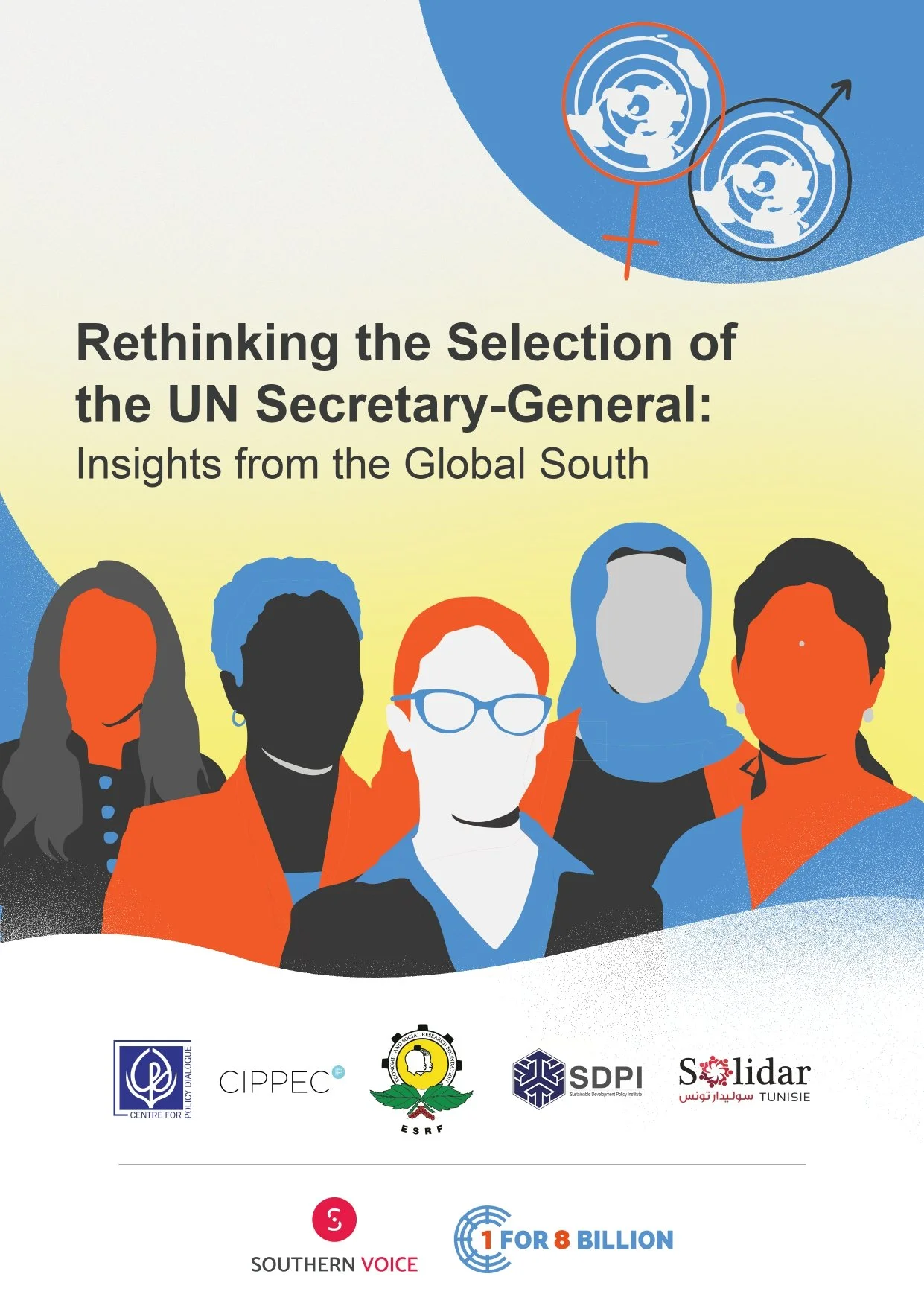
Our 1 for 8 Billion Synthesis Report brings together the key findings, recommendations, and cross-cutting insights emerging from the five policy briefs.
Policy Briefs
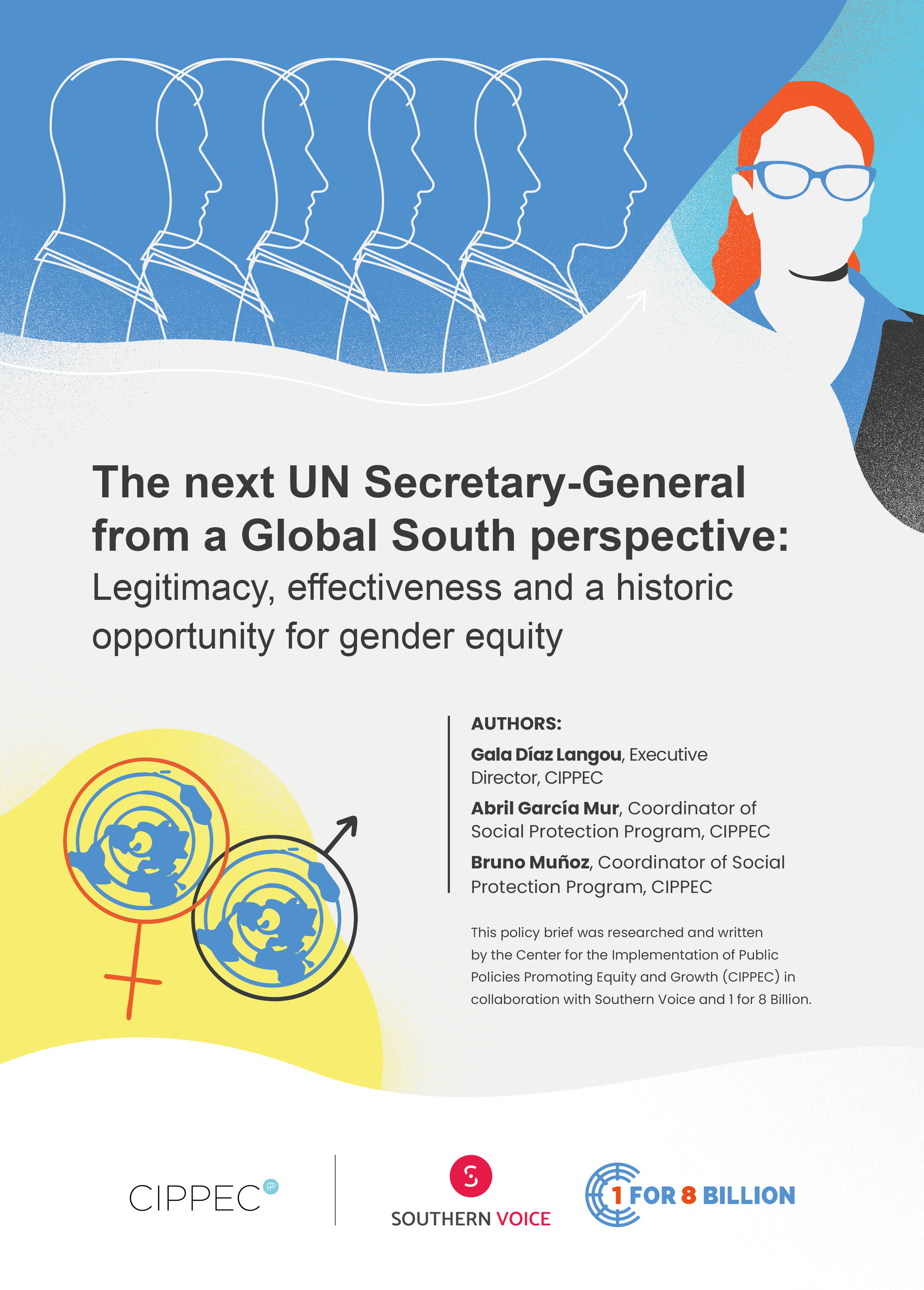
The Next United Nations Secretary-General from a Global South Perspective: Legitimacy, Effectiveness, and a Historic Opportunity for Gender Equity
Authors: Gala Díaz Langou, Abril García Mur and Bruno Muñoz (CIPPEC, Argentina)
This policy brief argues that how the next Secretary-General is selected is as important as the final outcome, as it shapes legitimacy, independence, and the ability to govern in a context of crisis in multilateralism. From a Latin American perspective, it calls for a more transparent and participatory process capable of addressing structural inequalities, particularly the historic exclusion of women, while aligning UN leadership with Global South priorities such as financing, climate action, food security, and inequality reduction.
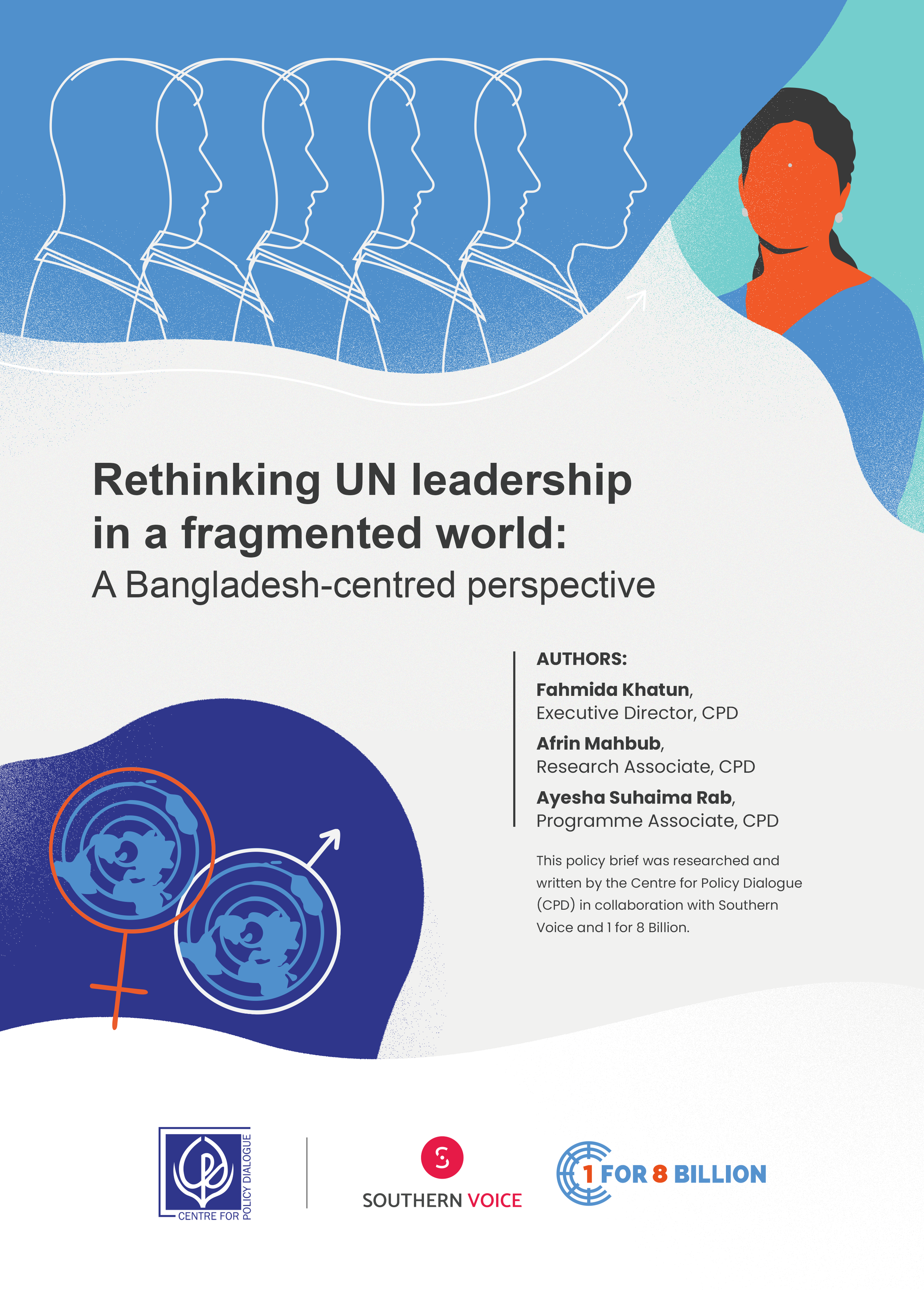
Rethinking UN Leadership in a Fragmented World: A Bangladesh-Centred Perspective
Authors: Fahmida Khatun, Afrin Mahbub and Ayesha Suhaima Rab (CPD, Bangladesh)
Drawing on Bangladesh’s experience, this brief examines the type of leadership the UN requires in a context of interconnected crises and increasing institutional strain. It shows that, despite normative progress, the underrepresentation of women remains structural and begins at the nomination stage, limiting the pool of viable candidates. It also emphasises that effective leadership requires more than symbolic representation: it includes coordination capacity, strategic vision, and a commitment to protecting vulnerable populations.
Eighty Years Without a Woman Secretary-General: Gender, Geography, and UN Leadership Legitimacy
Authors: Linda Mhando, Richard Ngilangwa and Vivian Kazi (ESRF, Tanzania)
This policy brief demonstrates how the historical absence of a woman in the role of Secretary-General reflects a misalignment between where global challenges are most concentrated and who holds leadership positions. From a Tanzanian perspective, it argues that gender representation and geographic balance are essential conditions for the credibility and effectiveness of the UN, particularly in a context where crises are concentrated in the Global South while decision-making power remains limited to a few actors.
Advancing Transparency, Independence, and Gender-Inclusive Leadership in the 1 for 8 Billion Campaign for The United Nations Secretary-General Selection
Authors: Sadia Satti and Ayesha Naeem (SDPI, Pakistan)
Based on in-depth evidence and Pakistan’s experience, this brief analyses how structural barriers, opaque power dynamics, and networks dominated by major powers continue to constrain women’s access to the UN leadership. It argues that appointing the first woman Secretary-General is not only a matter of equality, but of institutional effectiveness, and calls for concrete reforms to the selection process, including greater transparency, reduced reliance on informal negotiations, and a stronger role for non-permanent members of the Security Council.
From Electoral Representation to Global Executive Leadership: Lessons from Tunisia for Advocacy in Support of Electing a Woman as Secretary-General of the United Nations
Authors: Khaled Mejrii (Solidar Tunisie, Tunisia)
Using Tunisia’s experience, this brief shows how women’s access to leadership is shaped by institutional rules, political dynamics, social norms, and resource constraints. It highlights how seemingly neutral processes can reproduce inequality in the absence of corrective mechanisms, and underscores that electing a woman as Secretary-General requires deliberate political action, coordination among actors, and structural changes in how viable candidates emerge.
1 for 8 Billion thanks the Centro de Implementación de Políticas Públicas para la Equidad y el Crecimiento (CIPPEC), the Centre for Policy Dialogue (CPD), the Economic and Social Research Foundation (ESRF), the Sustainable Development Policy Institute (SDPI), and Solidar Tunisie for their dedication and partnership.