

1 for 8 Billion is at the UN to follow the interactive dialogues with Secretary-General candidates, where they are facing questions from member states and civil society. Here are our key takeaways from each session:
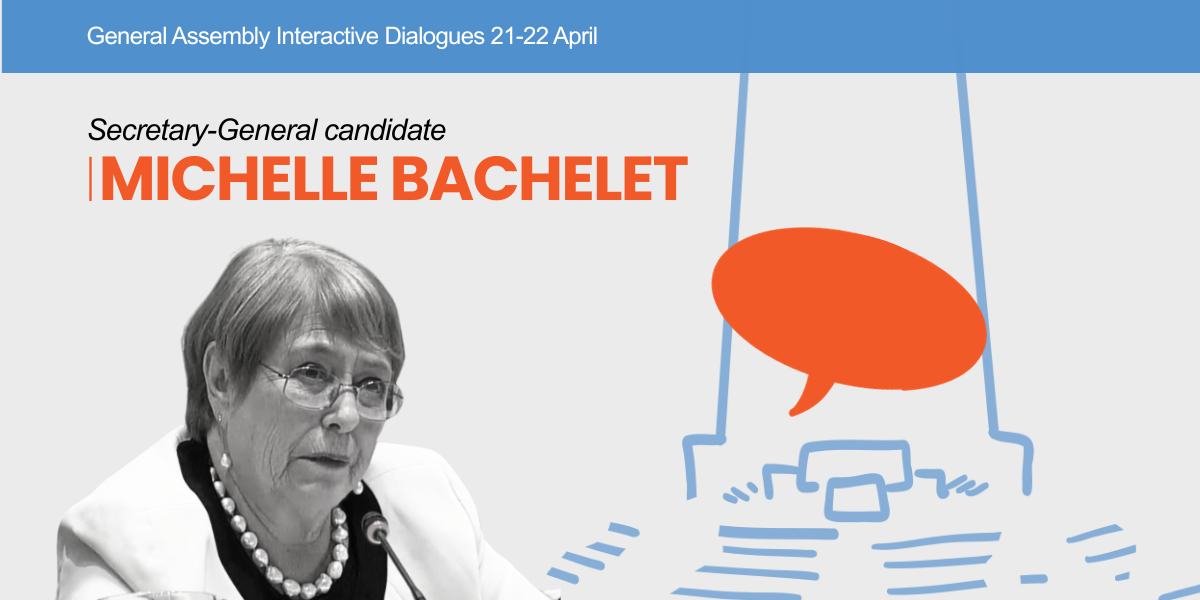
Ms Bachelet spoke strongly in defense of human rights as integral to peace and security and to development, and framed climate change as humanity's greatest threat.
Ms Bachelet emphasized the importance of maintaining the UN’s field presence in the face of broader budget cuts, repeatedly highlighting the Resident Coordinator system, and the need to protect resources for humanitarian response and prevention.
When asked by Norway, on behalf of the Accountability, Coherence, and Transparency Group, whether she would pledge to uphold 1 for 8 Billion’s Principles for Integrity in UN Secretary-General Campaigns, Ms Bachelet said she would go further than that and uphold the Principles not only in her campaign but in her tenure as SG.
When asked by 1 for 8 Billion what steps she would take to end national monopolies by powerful countries on top UN jobs, Ms Bachelet referred to her experience as President of Chile taking on politically charged personnel reforms: “I’m not afraid of doing that. I’ve done it in the past and I will do it… because it’s necessary in the UN. That’s my conviction and my commitment.”
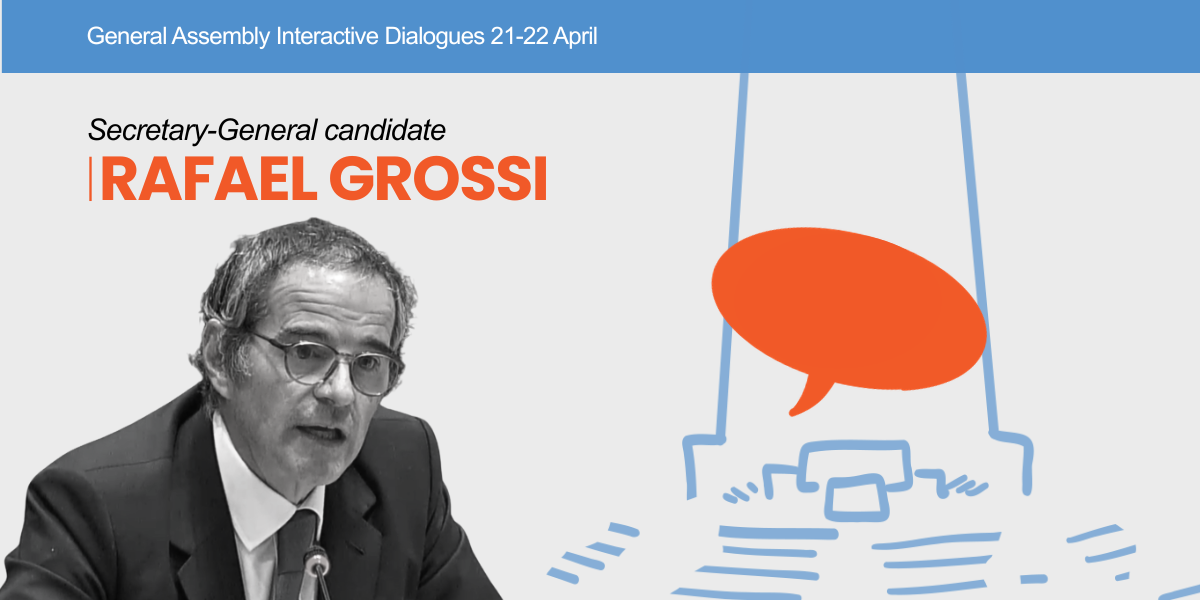
Mr Grossi emphasized the need for the Secretary-General to play a more active role on peace and security, including by showing up in person to conflict zones. He highlighted his experience engaging on security crises through his current role as Director General of the IAEA.
On reform, Mr Grossi commented that the UN is not working and that young people in particular do not have faith in the organization. He emphasized that reform does not require more conferences or reviews, but rather moving on to implementation, and that better communication was needed to restore trust in the UN.
Jordan on behalf of the Accountability, Coherence, and Transparency Group asked about ensuring independence from member states, as well as merit, gender, and geographic balance, in the allocation of senior UN jobs. In response, Mr Grossi discussed the importance of geographic representation but did not address independence from member states directly.
When asked by Estonia whether he would be willing to publish more detailed and updated financial disclosures, Mr Grossi said that he is paying for all campaign expenses from his own private funds, and so has nothing further to report.
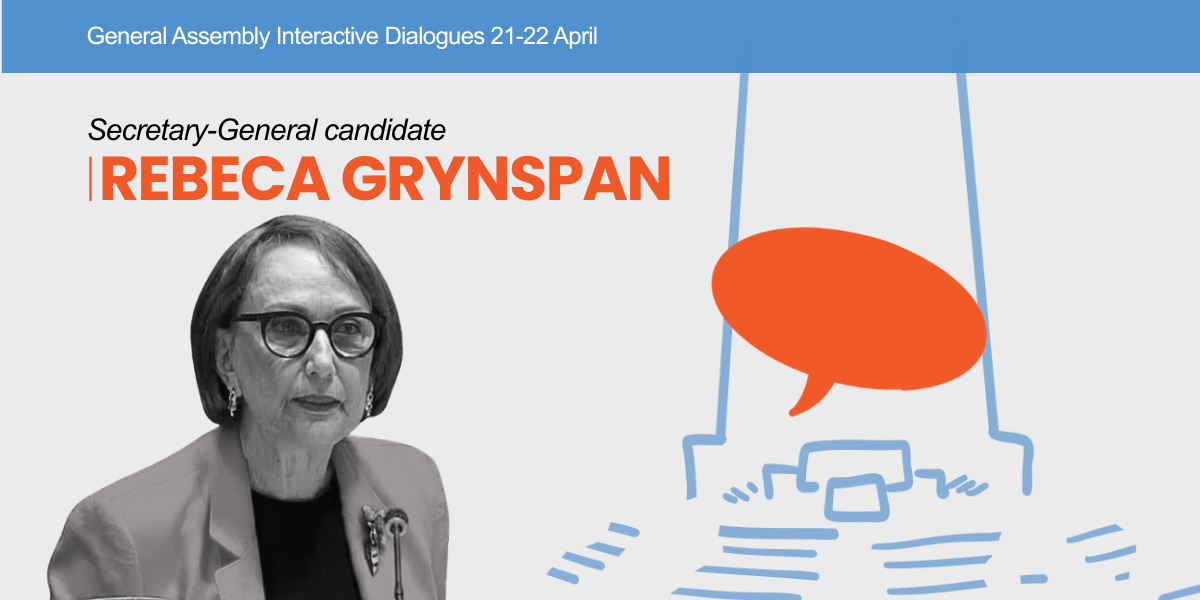
Ms Grynspan focused on the financial dimensions of diplomacy, advocating for fairer trade arrangements and debt relief, insisting that she would be “advocate for the systemic obstacles to be dealt with so development, SDGs and Agenda 2030 can progress”. She also committed to improving the UN’s financial management, saying the first thing she would do if appointed is “ask for the numbers”.
Drawing on her experience at UNCTAD negotiating the Black Sea Grain initiative, which, as she put it, “avoided a world food crisis”, Ms Grynspan said she would be peacemaker - travelling to where the wars are, speaking to all parties and keep trying: “that is the SG I will be”. Criticising current “bureaucratic pyramidal” approaches she suggested more flexible structures are required for mediation, pledging to restructure EOSG accordingly.
On climate change, Ms Grynspan noted that the UN must look at new ways of measuring challenges, looking at specific vulnerabilities not relying on GDP per capita. She championed adaptation financing on multiple occasions.
Ms Grynspan stressed the need for new and flexible modalities for peace operations to avoid one-size-fits-all solutions, and suggested merging the planning capacities of DPPA and DPO. She also highlighted the importance of monitoring human rights and early warning systems for preventative diplomacy. She also suggested the Resident Coordinator system be adapted to better coordinate all UN capacities and reduce duplication.
On alerting the Security Council to emerging crises, Ms Grynspan proposed that as SG she would attend informal Council consultations to enable early engagement and candid exchanges, rather than attending only formal Council meetings.
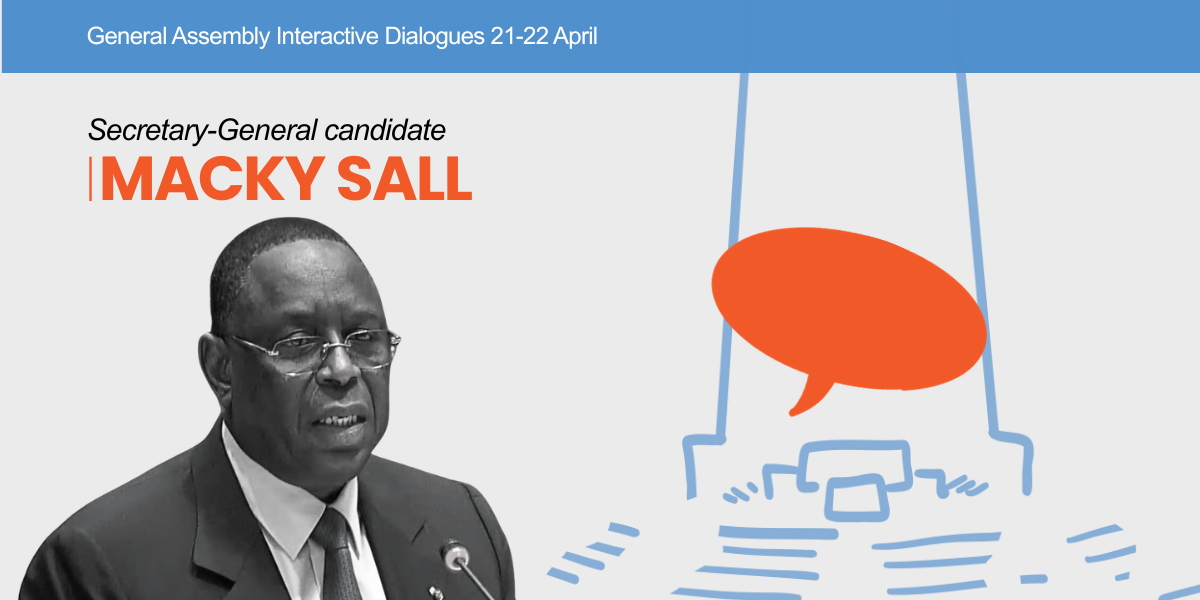
Mr Sall emphasized the theme of restoring trust in the UN, and proposed that he would achieve this by asserting the impartiality of the Secretary-General as someone who does not take sides with the West or the East, with the Global North or the Global South.
When asked about his vision statement, which mentions “peace and security, development, and shared prosperity,” but does not mention human rights, Mr Sall confirmed that he was committed to all three pillars of the United Nations, including human rights, without elaborating further.
Mr Sall placed importance on UN cooperation with regional organizations, and noted the implementation of Resolution 2719 on UN support to AU-led peace support operations as a priority. He also noted the importance of collective action on international terrorism, stating that those countries dealing with terrorism are on the global frontlines.
Mr Sall underlined the need for sustainable financing for development, including climate finance, as well as the need to address issues such as debt to increase the fiscal space for governments.
On diversity and representation in senior UN appointments, Mr Sall committed to appointing a woman from the Global North as his Deputy Secretary-General.
Stay tuned for our in-depth analysis of each candidates' policy positions on core UN issues from our expert NGO partners.
Illustrations by Bruna Barretto