
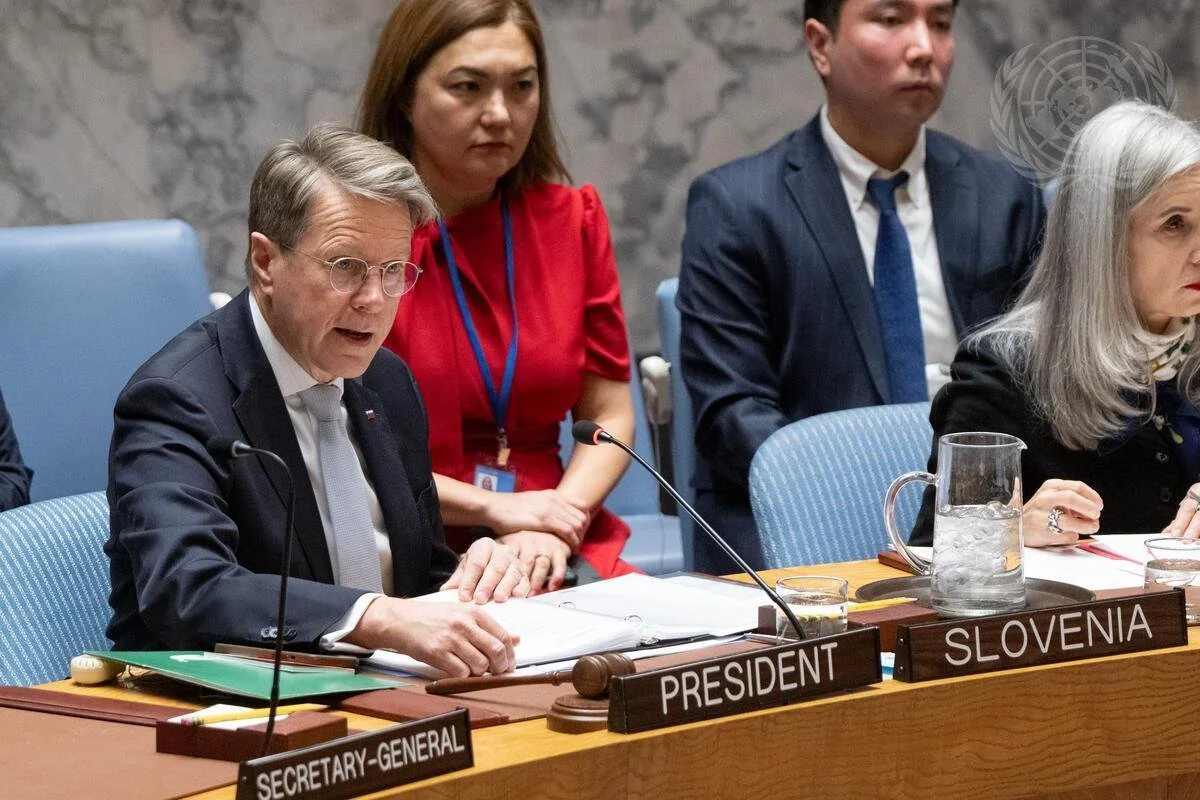
The appointment of the UN Secretary-General is one of the most consequential decisions taken by member states, requiring joint action by the Security Council and the General Assembly. The role has a unique mandate to mobilise action to address global challenges and ensure the organization serves the world’s eight billion people. Against a backdrop of unprecedented global turmoil, and an existential crisis of funding and legitimacy for the UN, the 2025/6 appointment process may well determine the future of the organization.
The Secretary-General’s leadership will be decisive not only in managing institutional mandates, but in whether the United Nations can credibly confront structural injustice, uphold universal human rights, international law and remain accountable to the people and communities it exists to serve.
Following a period of consultation with partners and supporter NGOs, 1 for 8 Billion has put together a comprehensive set of resources which bring together (1) the formal qualifications and requirements for the role, drawn from the UN Charter, General Assembly resolutions, UN documents and applicable international frameworks (2) a person specification for the role based on these formal requirements (3) recommendations for the structuring and assessment of vision statements and candidate hearings.
1 for 8 Billion is committed to continuing to refine our approach to candidate assessments - please get in touch if you have feedback.
We hope the resources contribute towards a healthy debate among member states and civil society regarding how candidates should be assessed, based on fair, transparent criteria.
1. FORMAL QUALIFICATIONS AND REQUIREMENTS
The 1945 UN Preparatory Commission report holds that “the Secretary-General, more than anyone else, will stand for the United Nations as a whole. In the eyes of the world, no less than in the eyes of his own staff, he must embody the principles and ideals of the Charter to which the Organization seeks to give effect”. ¹
States added some definition to the enormous role described by the Preparatory Commission in the UN Charter itself, and have subsequently elaborated on it in GA Resolutions and other UN documents. This definition has included: stating it needs to act as the “the chief administrative officer of the Organization”, meet “the highest standards of efficiency, competence and integrity”, demonstrate independence, a “firm commitment to the purposes and principles of the UN Charter”, as well as strong leadership, managerial, diplomatic, and multilingual communication skills.
These elements have never been consolidated in an official job description or person specification. In the absence of official resources on the role, we have brought together the formally agreed elements of the SG position.
2. PERSON SPECIFICATION
Selecting the next Secretary-General requires more than listing formal qualifications; it requires a shared understanding of how to interpret and operationalize the Charter’s standards and the expectations articulated in General Assembly resolutions, joint PGA–PSC letters and other guiding documents.
The UN’s Joint Inspection Unit remarked in its 2009 report that the UN Secretary-General has improved selection processes for all senior UN officials, “aimed at ensuring a much wider search for qualified candidates and allowing for a rigorous, open process against predetermined criteria”. UN inspectors went on to recommend that the Secretary-General establish criteria and terms of reference, including required competencies, qualifications and experience, expected from candidates for the posts of executive heads of UN funds, programmes and other subsidiary organs and entities².
It is now common practice for the Secretary-General to set predetermined criteria to evaluate candidates for UN senior managerial positions (at the level of Under Secretary-General, Assistant Secretary-General and Special Envoy) and to convey these criteria to Member States when soliciting nominations³.
We believe that it is logical that such good UN practice should also apply to the selection of the UN’s top position: its Secretary-General. The general objective criteria and desired qualifications identified by Member States in the UN Charter and official documents must not remain empty formulas. They should be given concrete content, clarifying how they apply to the role of the Secretary-General, in order to provide meaningful guidance both to candidates in presenting their candidacies and to Member States in evaluating them.
Read our proposed person specification, grounded in the objective criteria identified by Member States.
3. VISION STATEMENTS: ELEMENTS TO COVER
The vision statement is one of the most important tools for evaluating a candidate’s alignment with the requirements and the competencies outlined above. It provides candidates with a structured opportunity to demonstrate how they understand the role, how they would exercise their responsibilities, and how their experience and leadership approach correspond to the needs of the Organization today.
At the same time, vision statements offer Member States an opportunity to establish clearer, more consistent expectations regarding the information they require to make a merit-based and criteria-driven assessment. Developing a more common understanding of what a strong vision statement should contain would strengthen the transparency and coherence of the process and enable more effective comparison among candidates.
To that end we have put together a list of suggestions for topics member states may want to put to candidates.
1 for 8 Billion recent resources
The Ultimate Guide for the Upcoming UN Secretary-General Race - our latest explainer about the upcoming race - November 2025
Member State Tracker for a Woman SG - our tool tracking UN Member State support for a feminist woman Secretary-General - September 2025
Commentary on latest General Assembly commitments - September 2025
1 for 8 Billion’s briefing for reform at the General Assembly - July 2025
Our policy platform for a fair, open process to select the next UN Secretary-General - September 2024
¹ United Nations Preparatory Commission report, “The Secretary-General: Functions, Term of Appointment and Procedure of Appointment” (December 1945), Chapter VIII, Section 2 B para 17. Indicating the systemic discrimination at the time of drafting, the male pronouns used in this document were replicated in the UN Charter itself (see Article 97) in what turned out to be a prescient indictment of the subsequent 80 years (and counting) in which there has been an exclusive string of male UN Secretaries-General. Despite many attempts and broad agreement, these references have never been updated to gender neutral language.
² JIU/REP/2009/8 para 42, Recommendation 2.
³ Report of the Secretary-General, A64/640 para 43.
Photo: The Security Council meets on ‘Leadership for Peace’ on 15th December 2025. Credit: UN Photo/Eskinder Debebe